
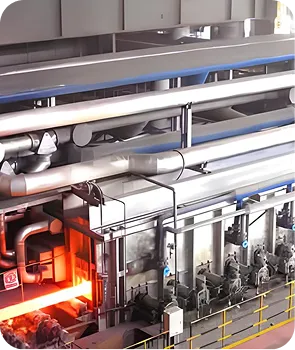
A furnace heating system is a central heating unit that warms air and distributes it throughout a building via ducts and vents. Furnaces can use gas, oil, or electricity as fuel, with some hybrid models combining gas and electric for efficiency. Key components include a burner or heating element, heat exchanger, blower/fan, ducts, thermostat, filter, and an exhaust vent for combustion gases. When the thermostat signals a drop in temperature, the furnace heats air, the blower circulates it through ducts, and exhaust gases are safely vented outside. Furnaces provide fast, even heating, can integrate with air conditioning, and high-efficiency models achieve 90–98% AFUE, though they require ductwork, maintenance, and electric versions may be costly to run.
| Specification | Details |
|---|---|
| Operating Temperature | Up to 1200°C |
| Standard Applications | Heat treatment of metals |
| Insulation |
Ceramic fiber blankets / modules Conventional refractory brick lining |
| Heating Media Options | Electric (EH), Gas, Diesel, Oil-fired |
| Heating Elements | Ni-Cr, Kanthal, or equivalent |
Explore our range of industrial furnaces and heating systems through real project images showcasing our engineering quality, precision manufacturing, and on-site installations.